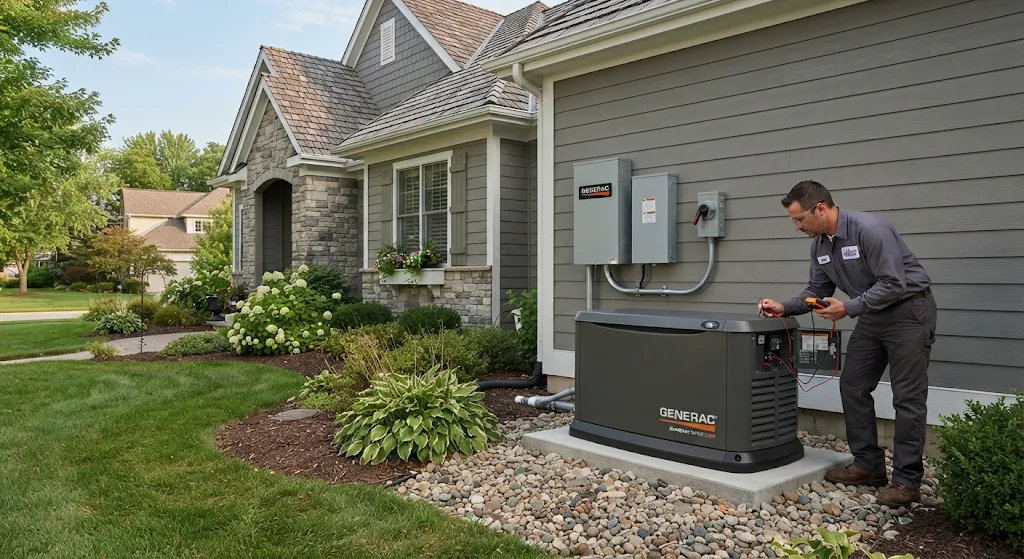
Professional Electrical Repair & Diagnostics in Kalamazoo, MI
Electrical malfunctions—ranging from nuisance circuit breaker trips and buzzing outlets to localized power interruptions and intermittent light flickering—require systematic diagnostic troubleshooting by a licensed professional. In Kalamazoo, residential and commercial electrical systems are exposed to seasonal temperature extremes and aging infrastructure that can degrade wire insulation, loosen terminations, and strain distribution components.
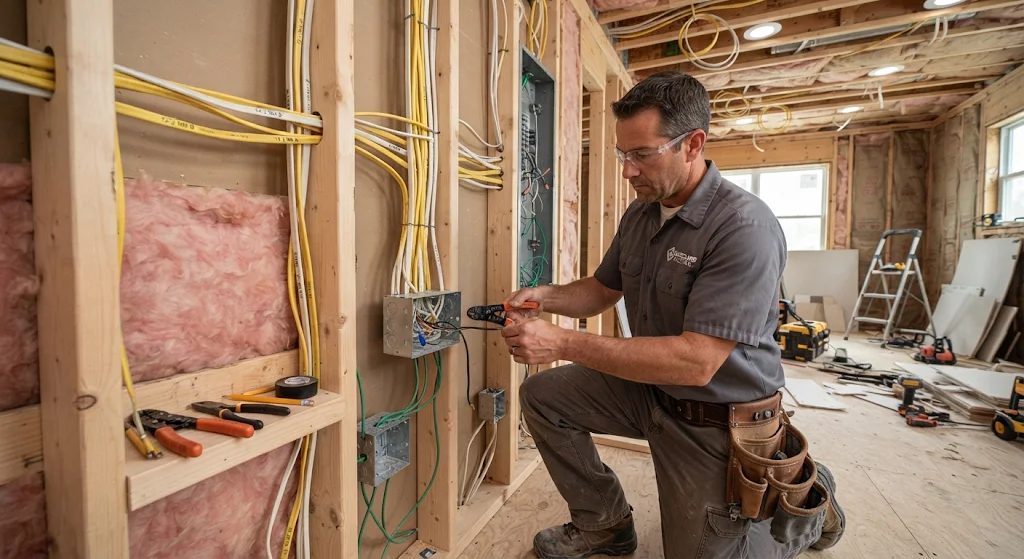
Common Symptoms Requiring Professional Evaluation
Property owners should never ignore subtle indicators of electrical distress. Key warning signs include:
- Circuit Breakers Frequently Tripping: Breakers trip due to overcurrent overloads or ground/short circuit faults. Repeated resets without diagnosing the root cause risk thermal conductor degradation and fire.
- Flickering or Dimming Lights: Often triggered when major appliances (like central AC compressors or refrigerators) start up, pointing to loose neutral connections, voltage drop, or shared circuits.
- Warm, Discolored, or Buzzing Outlets: Indicates high-resistance loose terminations or internal arcing within the device box.
- Burning Plastic Odor: A critical sign of overheating conductor insulation that warrants immediate power disconnection at the main breaker.
Local Context for Kalamazoo Properties
Characterized by historic pre-1950s homes in the Vine, Stuart, and Westnedge Hill neighborhoods alongside mid-century ranches in Milwood and contemporary residential builds toward Oshtemo Township.
In older neighborhoods, electrical repairs frequently uncover legacy wiring practices such as ungrounded two-wire branch circuits, improper wire splices outside junction boxes, or overloaded multi-wire branch circuits sharing a single neutral conductor. Licensed independent electricians evaluate the entire branch circuit to ensure safe operation under current Michigan electrical standards.
Safety First: Safe Observation vs. Professional Intervention
Homeowners can safely check whether a GFCI outlet has tripped or whether an appliance unplugged from a circuit resolves a breaker trip. However, taking off dead-front panel covers, probing live conductors, or replacing internal breakers involves severe electrocution and arc flash risks. All repairs inside electrical enclosures must be performed by qualified independent electricians.
Need Electrical Repairs in Kalamazoo?
Call WATT911 Michigan connection dispatch at (888) 605-9975. Speak with our team to route your electrical diagnostic or repair inquiry to an independent licensed contractor serving Kalamazoo.
Permits & Inspection Standards
Administered by the City of Kalamazoo Community Planning & Economic Development (CPED) Building Division. Electrical permits are strictly mandated for panel upgrades, branch rewiring, and major equipment drops under Michigan Part 8 Electrical Rules. While minor component replacements (such as a single standard receptacle) may not require permitting, repairing damaged service drops, running replacement branch wiring, or altering panel configurations requires official municipal permits and subsequent inspection to ensure code compliance and maintain property insurance validity.
Diagnostic Methodology & Systematic Fault Isolation
Locating an intermittent electrical issue requires a structured diagnostic protocol rather than trial-and-error component replacement. Independent licensed electricians utilize precision digital multimeters to measure line-to-neutral, line-to-ground, and neutral-to-ground voltages under both static and dynamic operating conditions. For example, a neutral-to-ground voltage exceeding 2 volts under normal load frequently points to a high-resistance loose neutral connection upstream, which can cause severe voltage imbalances where 120V circuits swing between 90V and 150V, destroying sensitive appliances and electronics.
Thermal imaging cameras (infrared thermography) are deployed inside main distribution panels to detect thermal anomalies before insulation burns. High electrical resistance at terminal lugs, oxidized bus bar contact fingers, and failing internal breaker mechanism springs generate localized hot spots exceeding 150°F (65°C). By isolating individual branch circuits, conducting insulation resistance (megohmmeter) tests at 500VDC or 1000VDC, and verifying circuit loop impedance, independent contractors accurately pinpoint faults behind finished drywall or inside buried conduit without destructive demolition.
Kalamazoo County Grounding Conditions & Utility Interconnects
Kalamazoo’s geological profile—defined by the Kalamazoo River basin with variable glacial outwash soils ranging from coarse gravel deposits in Oshtemo to dense silt plains near Portage Creek—creates unique electrical grounding challenges. Under Michigan Part 8 Electrical Rules and National Electrical Code Section 250.53, standard 8-foot copper-clad ground rods driven into sandy, high-resistivity gravel often fail to achieve the required 25-ohm ground resistance threshold. In neighborhoods like Westnedge Hill and the Stuart Historic District, independent electrical contractors regularly install dual driven grounding electrodes spaced at least 6 feet apart, or bond directly to municipal metallic water service pipes within 5 feet of entrance where continuous metal piping remains intact.
Utility service in Kalamazoo is supplied primarily by Consumers Energy. When upgrading service capacity to 200A or 400A for residential homes or commercial lab facilities along the West Main corridor, contractors must submit an official load letter to Consumers Energy’s West Michigan energy distribution engineers. This ensures that the local pole-mounted transformer and overhead service drop conductors can handle the continuous load without voltage sags or transformer overheating. Commercial installations near Western Michigan University and medical campus facilities along Crosstown Parkway require coordinated service disconnects and arc flash study validations before municipal inspectors approve reconnection.