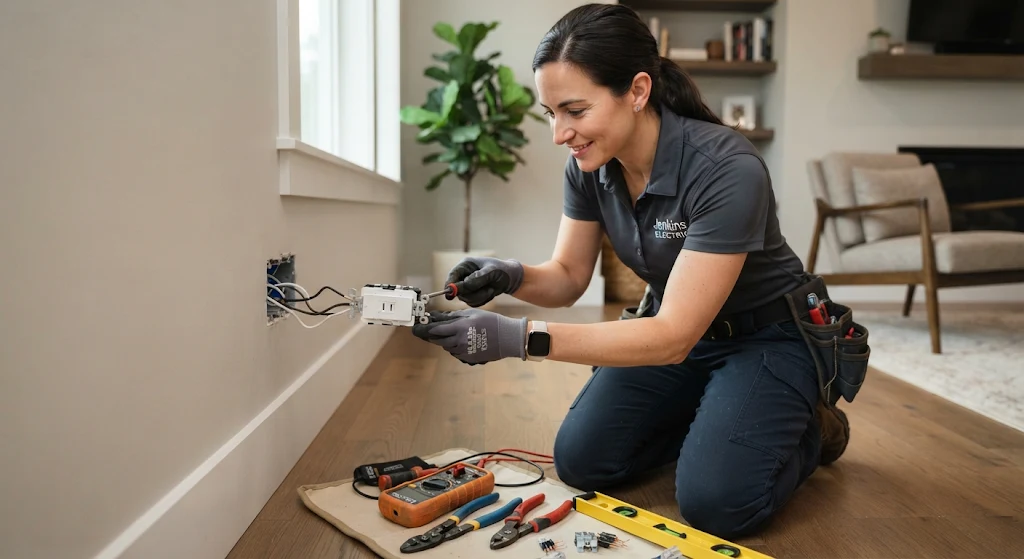
Comprehensive Electrical Wiring & Rewiring Services in Grand Rapids, MI
Electrical wiring distributes electrical energy safely behind walls, through ceilings, and across structural floor joists. In Grand Rapids, the diverse age of residential and commercial structures means that wiring conditions vary dramatically—from modern non-metallic sheathed cable (Romex) with dedicated equipment ground conductors to vintage knob-and-tube or early ungrounded cloth-jacketed wiring.
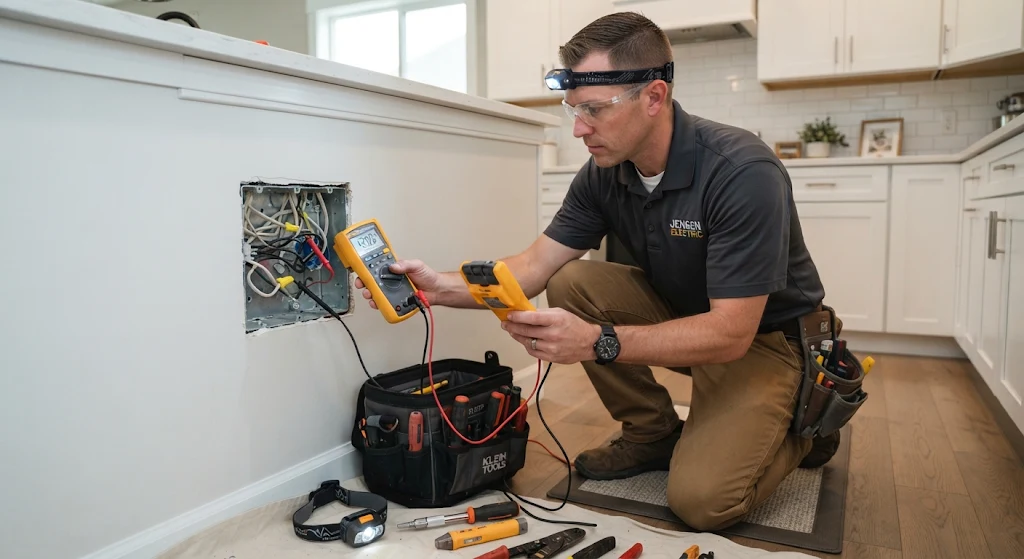
Wiring Warning Signs & Safety Risks
Deteriorated or improperly installed wiring poses hidden fire hazards. Warning indicators include:
- Brittle or Flaking Insulation: Cloth insulation degrades under continuous heat, exposing bare copper conductors to framing lumber and insulation.
- Knob-and-Tube Wiring: Commonly found in homes built before 1950 in Grand Rapids. Knob-and-tube lacks an equipment grounding wire, is rated for lower amperage, and can overheat if covered by modern thermal insulation.
- Aluminum Branch Wiring (Late 1960s – 1970s): Prone to oxidation and thermal expansion that loosens connections at standard switches and receptacles, creating fire hazards unless remediated with approved Al/Cu connectors.
- Lack of Grounding: Two-slot outlets prevent modern three-prong electronics and surge protectors from functioning safely.
Partial vs. Whole-House Rewiring
A partial rewire targets high-demand areas—such as remodeling kitchens, bathrooms, or dedicated workshop areas—adding modern 20A small-appliance circuits and Arc-Fault Circuit-Interrupter (AFCI) protection. Whole-house rewiring systematically replaces all legacy branch circuits with modern copper NM-B cable, installs grounded boxes throughout, and integrates AFCI/GFCI protection across living areas.
Navigating Municipal Permitting in Grand Rapids
Regulated by the City of Grand Rapids Development Center - Code Compliance Division. Electrical permits require licensed electrical contractor credentials and formal plan review for commercial builds. Whole-house rewiring and running new circuits require formal electrical permits and rough-in inspections before drywall is closed, followed by final electrical inspections upon device trim-out.
Modernize Your Electrical Wiring in Grand Rapids
Call WATT911 Michigan connection dispatch at (888) 605-9975. Connect with an independent licensed contractor to assess your home's wiring integrity and receive a professional evaluation.
Safe Installation & Code Compliance
All wiring work must adhere to Michigan Part 8 Electrical Rules and local municipal building codes. Independent contractors use specialized fishing techniques to minimize wall damage during rewires in finished historic homes.
Conductor Sizing, Box Fill Calculations & Remediation Standards
Modern electrical rewiring involves meticulous calculations of wire ampacity, conduit fill, and device box volume. Under NEC Section 314.16, every conductor, clamp, support fitting, device (switch or receptacle), and equipment grounding conductor counts toward total cubic-inch box fill volume. Overcrowding wires into undersized vintage junction boxes causes heat buildup and mechanical damage during device installation, creating prime conditions for dangerous electrical arcing.
When addressing homes with vintage aluminum branch circuit wiring, independent contractors utilize specialized, CPSC-approved remediation techniques. Standard wire nuts and conventional receptacles cannot be attached to aluminum wire due to differing thermal expansion rates and galvanic corrosion between dissimilar metals. Contractors either execute total copper rewiring or utilize calibrated COPALUM or AlumiConn mechanical torque connectors with anti-oxidant paste to permanently terminate copper pigtails onto existing aluminum conductors safely.
Kent County Multi-Family Densification & Commercial High-Voltage Distribution
Grand Rapids continues to experience rapid residential infill, historic loft conversions along the Grand River, and multi-story commercial development across Downtown and the Medical Mile along Michigan Street. In dense historic districts such as Heritage Hill and East Hills, brick and timber construction presents distinct cable pathway constraints. Running new high-ampacity electrical feeders through century-old joists requires non-combustible boring techniques, metal-clad (MC) armored cable, and strict firestopping compliance where branch circuits penetrate demising walls or multi-family assemblies.
Power distribution in Grand Rapids involves coordinated interfaces between Consumers Energy network underground grids downtown and overhead distribution systems in outlying townships like Cascade and Forest Hills. Independent commercial electrical contractors routinely manage 480V/277V step-down transformers, centralized metering centers for multi-tenant retail plazas, and specialized harmonic-mitigating transformers required by high-density digital server equipment and medical imaging suites. The City of Grand Rapids Development Center requires detailed one-line schematics and fault current calculations before issuing permits for any commercial electrical service exceeding 400 amperes.