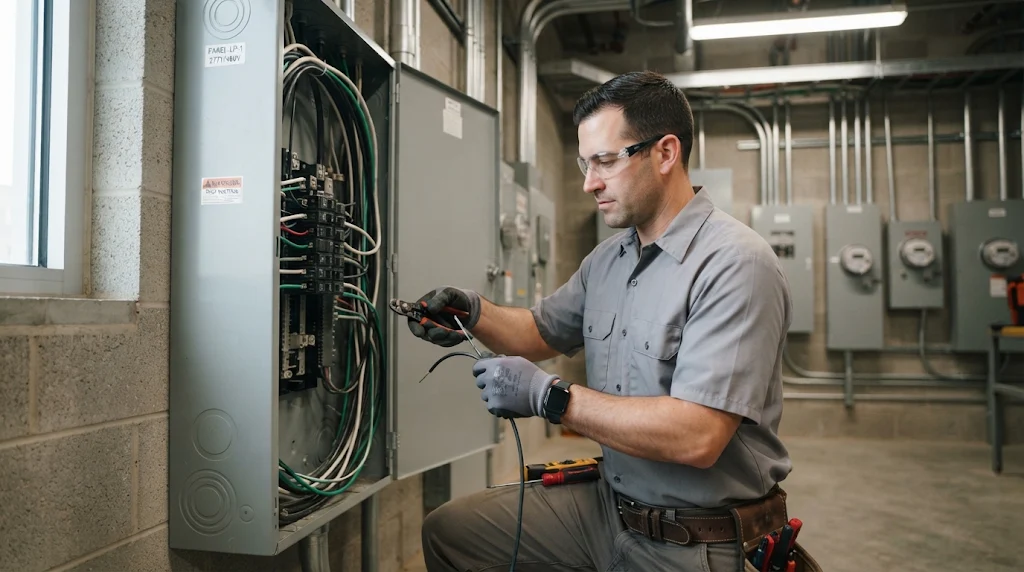
Whole-Home Backup Generator Installation in Grand Rapids, MI
Michigan's weather brings severe winter ice storms, heavy snowfall, and summer convective thunderstorms that can cause widespread electrical grid outages. For homeowners and business facilities in Grand Rapids, installing a whole-home automatic standby generator ensures uninterrupted power, keeping critical heating, refrigeration, medical equipment, and security systems fully operational.
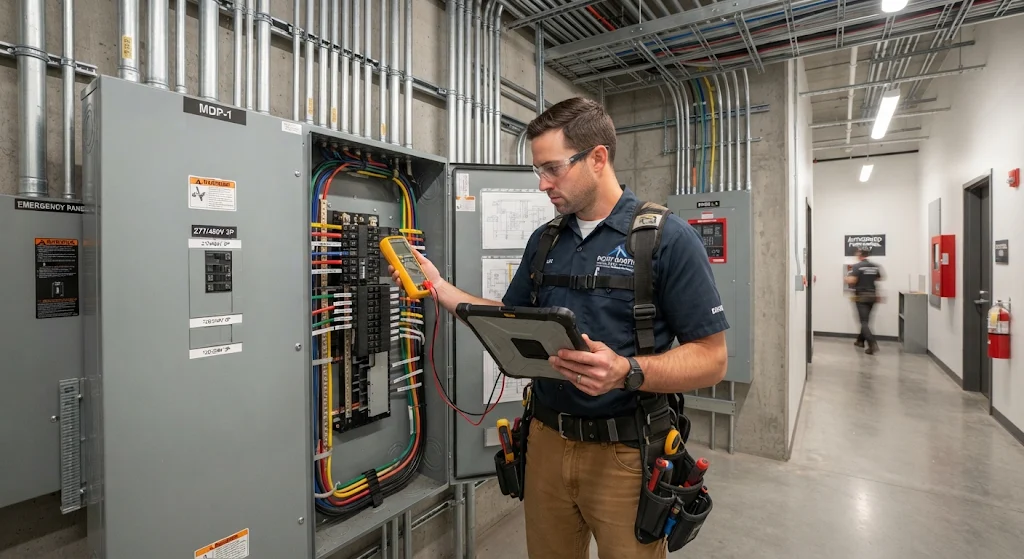
Standby Generators vs. Portable Generators
While portable gasoline generators provide limited temporary power, they require manual outdoor setup, extension cord routing, constant refueling, and present carbon monoxide hazards if mishandled. Permanently installed standby generators offer significant advantages:
- Automatic Transfer Switch (ATS): Detects utility power loss within seconds, automatically starts the engine, and transfers electrical loads without requiring manual intervention.
- Continuous Fuel Supply: Plumbed directly to existing natural gas lines or on-site liquid propane (LP) tanks, eliminating the need to store and handle gasoline.
- Whole-House or Managed Load Coverage: Modern load-shedding modules prioritize essential appliances (furnace blower, sump pumps, refrigeration) before powering secondary comfort loads like AC units.
- Self-Exercising Diagnostics: Units perform scheduled weekly test cycles to verify operational readiness and battery charge.
Sizing & Capacity Considerations
Generator sizing depends on whether you select essential-circuit coverage (10kW – 14kW) or whole-property coverage (18kW – 26kW+). An independent licensed electrician conducts a formal starting-kilowatt and running-kilowatt load calculation, paying close attention to heavy motor locked-rotor amps (LRA) from central HVAC compressors and well pumps.
Municipal Permits, Clearance & Gas Coordination in Grand Rapids
Regulated by the City of Grand Rapids Development Center - Code Compliance Division. Electrical permits require licensed electrical contractor credentials and formal plan review for commercial builds.
Installing a standby generator involves dual-trade coordination: an electrical permit for the ATS, service disconnect, and control wiring, alongside a mechanical/plumbing permit for the natural gas line extension. Furthermore, strict local zoning setbacks mandate minimum clearances from property lines, operable windows, and air intake vents to prevent carbon monoxide infiltration.
Protect Your Grand Rapids Property with Backup Power
Call WATT911 Michigan connection dispatch at (888) 605-9975. Connect with an independent licensed contractor to assess generator capacity, transfer switches, and municipal installation requirements.
Maintenance & Longevity
Standby generators require annual oil and filter changes, valve adjustments, and battery replacements to ensure reliable performance during severe winter weather events in Michigan.
Load Shedding Architecture, Transfer Switch Interlocks & Fuel Hydraulics
Proper standby generator integration relies on balancing peak inrush currents against generator kilowatt ratings. When large electric motors—such as central air conditioning scroll compressors or geothermal circulation pumps—start up, their initial inrush current (Locked Rotor Amps or LRA) can be five to seven times their running current. Independent electrical contractors often integrate soft-start capacitors or smart digital load-shedding modules into the Automatic Transfer Switch (ATS). These modules monitor generator output frequency; if engine RPM droops under heavy electrical demand, non-essential loads (such as electric water heaters or secondary HVAC zones) are automatically shed for several minutes to protect the generator from stalling.
Furthermore, contractors verify fuel supply dynamics. A 22kW standby generator operating at full electrical load consumes approximately 250 to 300 cubic feet per hour (CFH) of natural gas at 3.5 to 7.0 inches of water column pressure. Electricians collaborate with licensed mechanical contractors to verify that the municipal gas meter and supply pipe diameter can supply both the generator and existing heating appliances simultaneously during freezing winter storms.
Kent County Multi-Family Densification & Commercial High-Voltage Distribution
Grand Rapids continues to experience rapid residential infill, historic loft conversions along the Grand River, and multi-story commercial development across Downtown and the Medical Mile along Michigan Street. In dense historic districts such as Heritage Hill and East Hills, brick and timber construction presents distinct cable pathway constraints. Running new high-ampacity electrical feeders through century-old joists requires non-combustible boring techniques, metal-clad (MC) armored cable, and strict firestopping compliance where branch circuits penetrate demising walls or multi-family assemblies.
Power distribution in Grand Rapids involves coordinated interfaces between Consumers Energy network underground grids downtown and overhead distribution systems in outlying townships like Cascade and Forest Hills. Independent commercial electrical contractors routinely manage 480V/277V step-down transformers, centralized metering centers for multi-tenant retail plazas, and specialized harmonic-mitigating transformers required by high-density digital server equipment and medical imaging suites. The City of Grand Rapids Development Center requires detailed one-line schematics and fault current calculations before issuing permits for any commercial electrical service exceeding 400 amperes.