Commercial Electrical Services & Power Systems in Lansing, MI
Commercial facilities—including corporate offices, retail spaces, healthcare clinics, light industrial warehouses, and hospitality venues in Lansing—operate under demanding electrical requirements. Commercial power systems must deliver reliable three-phase power, efficient high-bay lighting, dedicated machinery connections, and uncompromised life-safety systems in compliance with National Electrical Code (NEC) and NFPA 70E standards.
Core Commercial Electrical Solutions
Independent licensed commercial electrical contractors provide specialized capabilities tailored to business infrastructure:
- Three-Phase Power Distribution: Installing and maintaining 208Y/120V and 480Y/277V step-down transformers, switchgear, distribution panels, and busway systems.
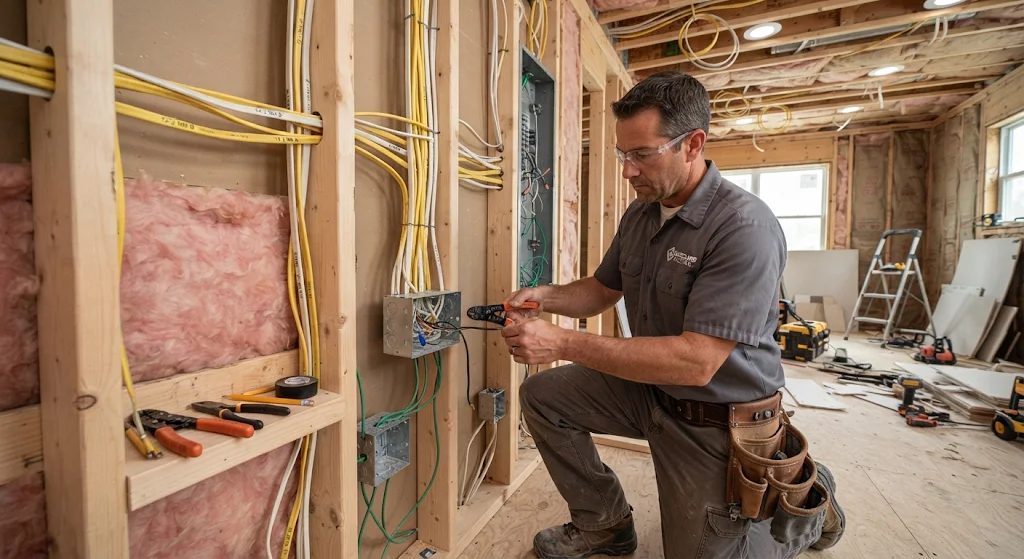
- Commercial Tenant Improvements & Buildouts: Remodeling retail stores, restaurants, and medical offices—including branch circuit reconfigurations, dedicated equipment circuits, and POS wiring.
- Commercial LED Lighting & Controls: Upgrading commercial parking lot lighting, high-bay warehouse fixtures, and Title 24/ASHRAE compliant motion/daylight harvesting automated controls.
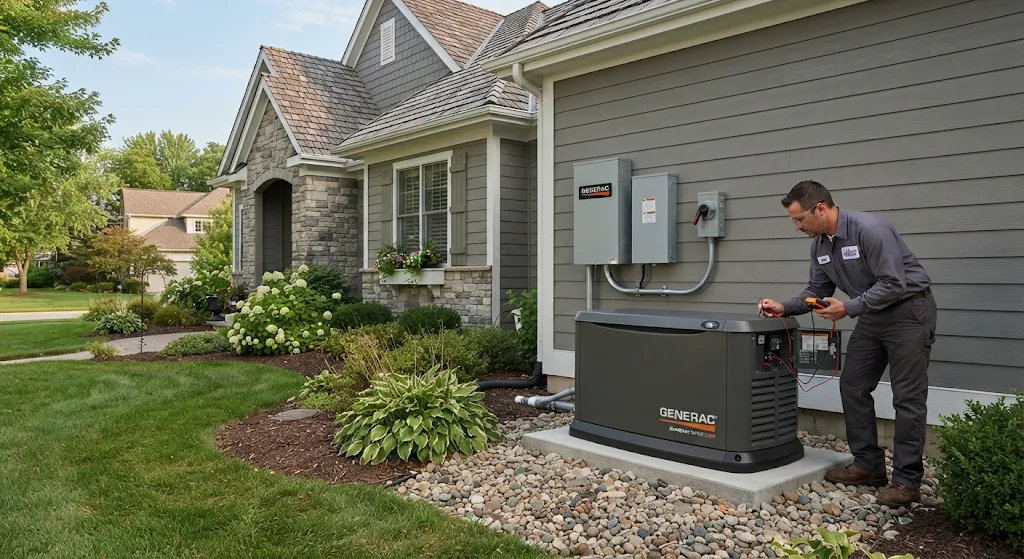
- Emergency Power & Life Safety: Wiring emergency egress lighting, exit signs, standby commercial generators, and fire alarm power interlocks.
- Dedicated Equipment Drops: Powering commercial refrigeration racks, commercial kitchen cooking equipment, HVAC air handlers, and server room UPS circuits.
Minimizing Business Downtime
Unplanned electrical outages disrupt operations and result in substantial financial losses. Independent commercial contractors coordinate scheduled evening, weekend, or holiday service shutoffs to execute switchgear maintenance, transformer servicing, and panel overhauls without interrupting daily commercial revenue.
Permitting, Plan Review & Code Compliance in Lansing
Issued through the City of Lansing Building Safety Office or neighboring township building authorities depending on exact jurisdictional borders. Strict compliance with 2023 NEC / Michigan Electrical Code. Commercial projects routinely mandate engineered electrical schematics, plan review submissions, and multi-stage municipal inspections (rough conduit, in-slab, above-ceiling, and final approval) before certificates of occupancy are granted.
Engage an Independent Commercial Electrician in Lansing
Contact WATT911 Michigan connection dispatch at (888) 605-9975. Route your commercial facility, tenant buildout, or power distribution project to an independent licensed contractor in Lansing.
Safety & Compliance Verification
Every commercial electrical installation must strictly conform to Michigan statutory licensing requirements, OSHA regulations, and local municipal fire codes. Independent contractors handle site safety protocols and coordinate directly with local electrical inspectors.
Short-Circuit Current Ratings (SCCR), Harmonic Distortion & Life Safety Coordination
Commercial power systems operate under strict engineering parameters governing available fault current and power quality. Under NEC Article 110.24, commercial service equipment must be marked with the maximum available fault current (often exceeding 22,000 to 65,000 AIC) calculated from the utility transformer impedance. Independent commercial electrical contractors select circuit breakers and switchgear with Short-Circuit Current Ratings (SCCR) that equal or exceed this available fault level, preventing catastrophic switchgear explosion during short-circuit events.
Additionally, modern commercial facilities operating extensive LED lighting drivers, computer power supplies, and variable-speed fan motors generate significant harmonic distortion (non-linear electrical loads). These harmonics circulate through neutral conductors, causing neutral overheating and transformer eddy current losses. Commercial contractors install 200% rated oversized neutral conductors, K-factor transformers, and transient voltage surge suppressors (TVSS) at distribution subpanels to protect sensitive commercial tenant IT equipment.
Capital Region Dual-Utility Grid Dynamics & Institutional Service Reliability
Lansing occupies a unique position in Michigan’s electrical landscape due to the presence of both the municipal Lansing Board of Water & Light (BWL) and Consumers Energy operating across adjacent municipal boundaries in Ingham, Eaton, and Clinton counties. Property owners in Moores Park, Downtown Lansing, and the Eastside must verify their exact utility provider, as BWL and Consumers Energy maintain differing meter enclosure requirements, cold-sequence vs. hot-sequence disconnect rules, and utility interconnection tariffs for standby power systems.
Institutional facilities—including state government office complexes, court facilities, and General Motors’ Lansing Grand River and Delta Township assembly plants—require continuous power reliability and sophisticated electrical switchgear management. Independent commercial and industrial electrical contractors serving the capital area manage high-voltage feeder maintenance, automatic transfer switch calibrations for emergency egress pathways, and energy-management submetering that complies with Michigan Department of Licensing and Regulatory Affairs (LARA) commercial energy codes.