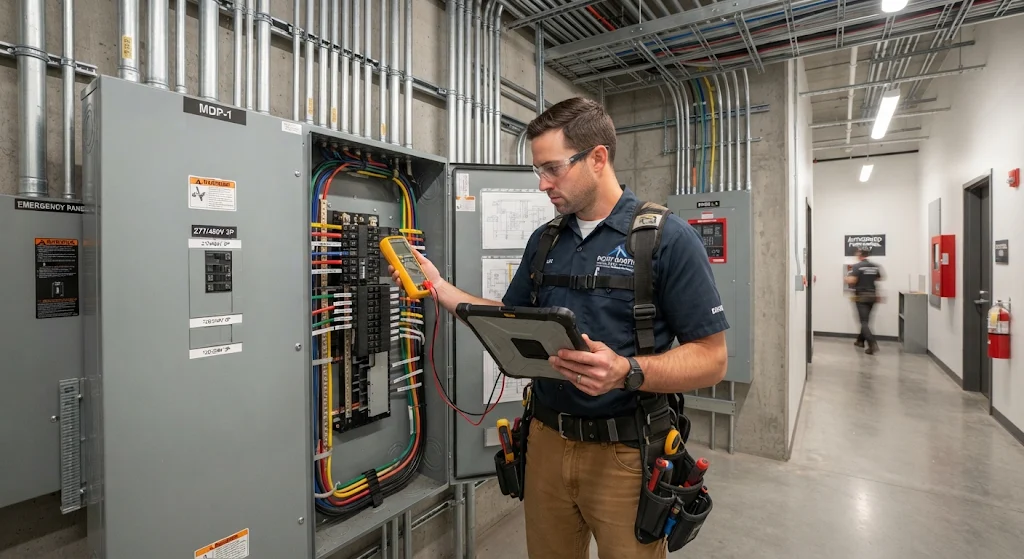
Professional Electrical Repair & Diagnostics in Lansing, MI
Electrical malfunctions—ranging from nuisance circuit breaker trips and buzzing outlets to localized power interruptions and intermittent light flickering—require systematic diagnostic troubleshooting by a licensed professional. In Lansing, residential and commercial electrical systems are exposed to seasonal temperature extremes and aging infrastructure that can degrade wire insulation, loosen terminations, and strain distribution components.
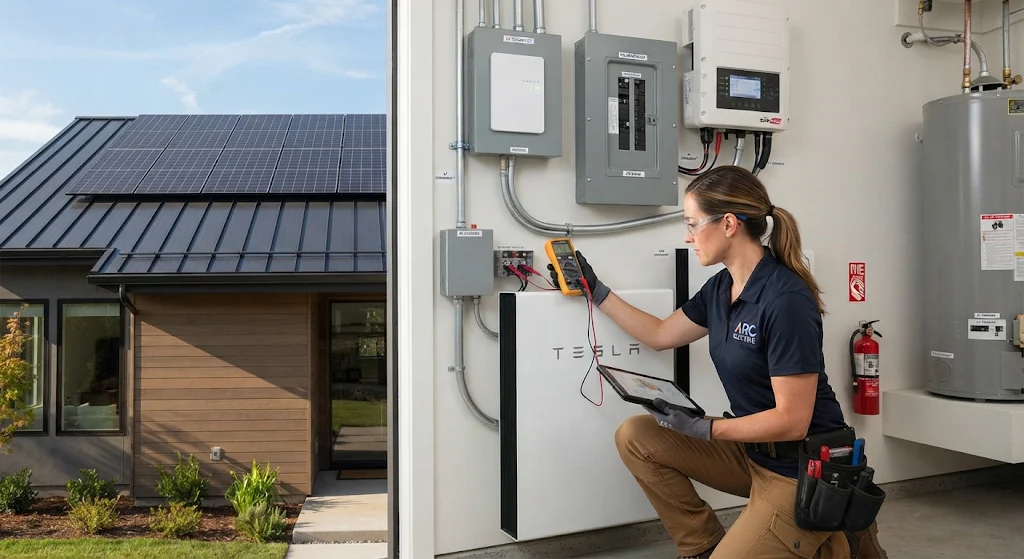
Common Symptoms Requiring Professional Evaluation
Property owners should never ignore subtle indicators of electrical distress. Key warning signs include:
- Circuit Breakers Frequently Tripping: Breakers trip due to overcurrent overloads or ground/short circuit faults. Repeated resets without diagnosing the root cause risk thermal conductor degradation and fire.
- Flickering or Dimming Lights: Often triggered when major appliances (like central AC compressors or refrigerators) start up, pointing to loose neutral connections, voltage drop, or shared circuits.
- Warm, Discolored, or Buzzing Outlets: Indicates high-resistance loose terminations or internal arcing within the device box.
- Burning Plastic Odor: A critical sign of overheating conductor insulation that warrants immediate power disconnection at the main breaker.
Local Context for Lansing Properties
Mix of historic single-family brick homes in Moores Park and Westside, 1960s suburban subdivisions in South Lansing, and vibrant student-adjacent multi-family housing near Michigan State University.
In older neighborhoods, electrical repairs frequently uncover legacy wiring practices such as ungrounded two-wire branch circuits, improper wire splices outside junction boxes, or overloaded multi-wire branch circuits sharing a single neutral conductor. Licensed independent electricians evaluate the entire branch circuit to ensure safe operation under current Michigan electrical standards.
Safety First: Safe Observation vs. Professional Intervention
Homeowners can safely check whether a GFCI outlet has tripped or whether an appliance unplugged from a circuit resolves a breaker trip. However, taking off dead-front panel covers, probing live conductors, or replacing internal breakers involves severe electrocution and arc flash risks. All repairs inside electrical enclosures must be performed by qualified independent electricians.
Need Electrical Repairs in Lansing?
Call WATT911 Michigan connection dispatch at (888) 605-9975. Speak with our team to route your electrical diagnostic or repair inquiry to an independent licensed contractor serving Lansing.
Permits & Inspection Standards
Issued through the City of Lansing Building Safety Office or neighboring township building authorities depending on exact jurisdictional borders. Strict compliance with 2023 NEC / Michigan Electrical Code. While minor component replacements (such as a single standard receptacle) may not require permitting, repairing damaged service drops, running replacement branch wiring, or altering panel configurations requires official municipal permits and subsequent inspection to ensure code compliance and maintain property insurance validity.
Diagnostic Methodology & Systematic Fault Isolation
Locating an intermittent electrical issue requires a structured diagnostic protocol rather than trial-and-error component replacement. Independent licensed electricians utilize precision digital multimeters to measure line-to-neutral, line-to-ground, and neutral-to-ground voltages under both static and dynamic operating conditions. For example, a neutral-to-ground voltage exceeding 2 volts under normal load frequently points to a high-resistance loose neutral connection upstream, which can cause severe voltage imbalances where 120V circuits swing between 90V and 150V, destroying sensitive appliances and electronics.
Thermal imaging cameras (infrared thermography) are deployed inside main distribution panels to detect thermal anomalies before insulation burns. High electrical resistance at terminal lugs, oxidized bus bar contact fingers, and failing internal breaker mechanism springs generate localized hot spots exceeding 150°F (65°C). By isolating individual branch circuits, conducting insulation resistance (megohmmeter) tests at 500VDC or 1000VDC, and verifying circuit loop impedance, independent contractors accurately pinpoint faults behind finished drywall or inside buried conduit without destructive demolition.
Capital Region Dual-Utility Grid Dynamics & Institutional Service Reliability
Lansing occupies a unique position in Michigan’s electrical landscape due to the presence of both the municipal Lansing Board of Water & Light (BWL) and Consumers Energy operating across adjacent municipal boundaries in Ingham, Eaton, and Clinton counties. Property owners in Moores Park, Downtown Lansing, and the Eastside must verify their exact utility provider, as BWL and Consumers Energy maintain differing meter enclosure requirements, cold-sequence vs. hot-sequence disconnect rules, and utility interconnection tariffs for standby power systems.
Institutional facilities—including state government office complexes, court facilities, and General Motors’ Lansing Grand River and Delta Township assembly plants—require continuous power reliability and sophisticated electrical switchgear management. Independent commercial and industrial electrical contractors serving the capital area manage high-voltage feeder maintenance, automatic transfer switch calibrations for emergency egress pathways, and energy-management submetering that complies with Michigan Department of Licensing and Regulatory Affairs (LARA) commercial energy codes.