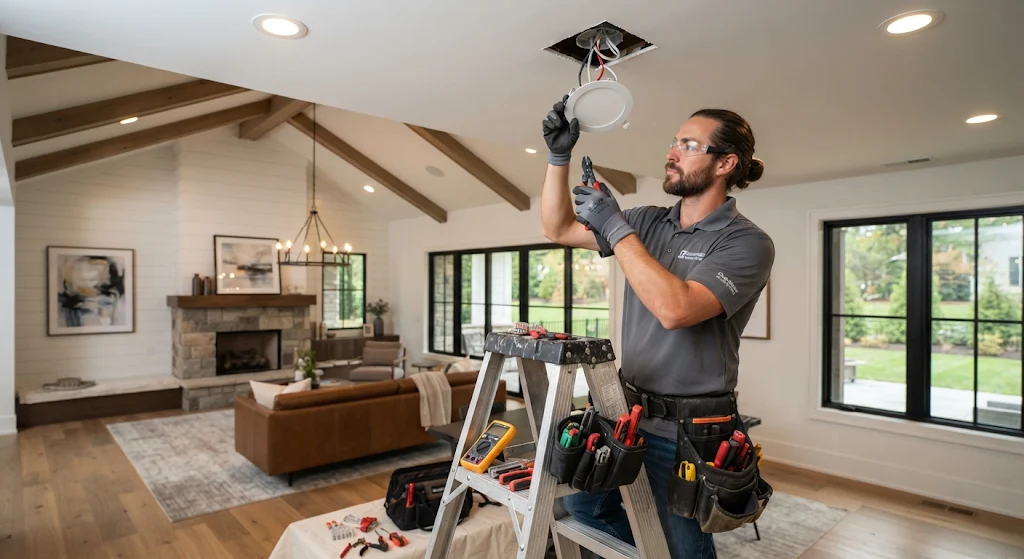
Comprehensive Electrical Wiring & Rewiring Services in Lansing, MI
Electrical wiring distributes electrical energy safely behind walls, through ceilings, and across structural floor joists. In Lansing, the diverse age of residential and commercial structures means that wiring conditions vary dramatically—from modern non-metallic sheathed cable (Romex) with dedicated equipment ground conductors to vintage knob-and-tube or early ungrounded cloth-jacketed wiring.
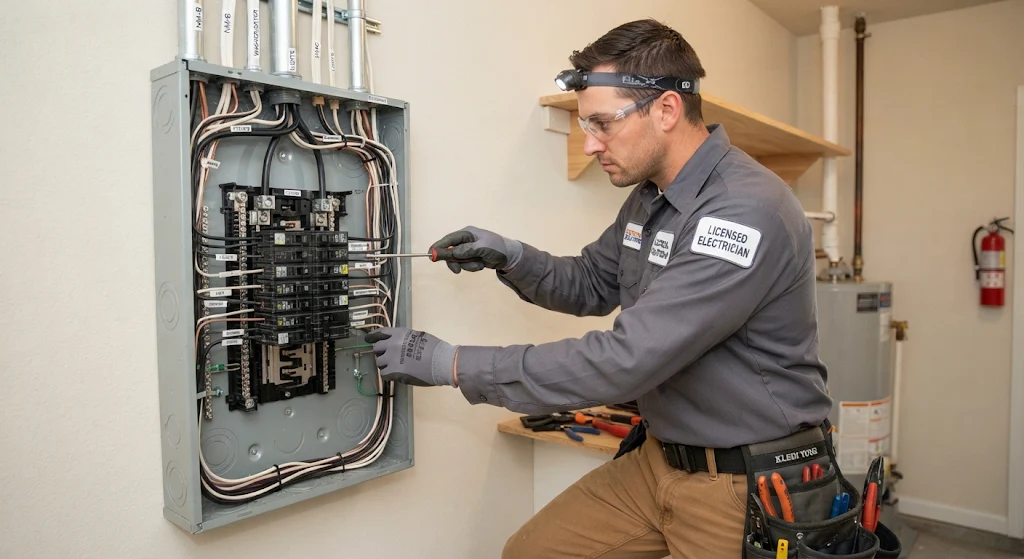
Wiring Warning Signs & Safety Risks
Deteriorated or improperly installed wiring poses hidden fire hazards. Warning indicators include:
- Brittle or Flaking Insulation: Cloth insulation degrades under continuous heat, exposing bare copper conductors to framing lumber and insulation.
- Knob-and-Tube Wiring: Commonly found in homes built before 1950 in Lansing. Knob-and-tube lacks an equipment grounding wire, is rated for lower amperage, and can overheat if covered by modern thermal insulation.
- Aluminum Branch Wiring (Late 1960s – 1970s): Prone to oxidation and thermal expansion that loosens connections at standard switches and receptacles, creating fire hazards unless remediated with approved Al/Cu connectors.
- Lack of Grounding: Two-slot outlets prevent modern three-prong electronics and surge protectors from functioning safely.
Partial vs. Whole-House Rewiring
A partial rewire targets high-demand areas—such as remodeling kitchens, bathrooms, or dedicated workshop areas—adding modern 20A small-appliance circuits and Arc-Fault Circuit-Interrupter (AFCI) protection. Whole-house rewiring systematically replaces all legacy branch circuits with modern copper NM-B cable, installs grounded boxes throughout, and integrates AFCI/GFCI protection across living areas.
Navigating Municipal Permitting in Lansing
Issued through the City of Lansing Building Safety Office or neighboring township building authorities depending on exact jurisdictional borders. Strict compliance with 2023 NEC / Michigan Electrical Code. Whole-house rewiring and running new circuits require formal electrical permits and rough-in inspections before drywall is closed, followed by final electrical inspections upon device trim-out.
Modernize Your Electrical Wiring in Lansing
Call WATT911 Michigan connection dispatch at (888) 605-9975. Connect with an independent licensed contractor to assess your home's wiring integrity and receive a professional evaluation.
Safe Installation & Code Compliance
All wiring work must adhere to Michigan Part 8 Electrical Rules and local municipal building codes. Independent contractors use specialized fishing techniques to minimize wall damage during rewires in finished historic homes.
Conductor Sizing, Box Fill Calculations & Remediation Standards
Modern electrical rewiring involves meticulous calculations of wire ampacity, conduit fill, and device box volume. Under NEC Section 314.16, every conductor, clamp, support fitting, device (switch or receptacle), and equipment grounding conductor counts toward total cubic-inch box fill volume. Overcrowding wires into undersized vintage junction boxes causes heat buildup and mechanical damage during device installation, creating prime conditions for dangerous electrical arcing.
When addressing homes with vintage aluminum branch circuit wiring, independent contractors utilize specialized, CPSC-approved remediation techniques. Standard wire nuts and conventional receptacles cannot be attached to aluminum wire due to differing thermal expansion rates and galvanic corrosion between dissimilar metals. Contractors either execute total copper rewiring or utilize calibrated COPALUM or AlumiConn mechanical torque connectors with anti-oxidant paste to permanently terminate copper pigtails onto existing aluminum conductors safely.
Capital Region Dual-Utility Grid Dynamics & Institutional Service Reliability
Lansing occupies a unique position in Michigan’s electrical landscape due to the presence of both the municipal Lansing Board of Water & Light (BWL) and Consumers Energy operating across adjacent municipal boundaries in Ingham, Eaton, and Clinton counties. Property owners in Moores Park, Downtown Lansing, and the Eastside must verify their exact utility provider, as BWL and Consumers Energy maintain differing meter enclosure requirements, cold-sequence vs. hot-sequence disconnect rules, and utility interconnection tariffs for standby power systems.
Institutional facilities—including state government office complexes, court facilities, and General Motors’ Lansing Grand River and Delta Township assembly plants—require continuous power reliability and sophisticated electrical switchgear management. Independent commercial and industrial electrical contractors serving the capital area manage high-voltage feeder maintenance, automatic transfer switch calibrations for emergency egress pathways, and energy-management submetering that complies with Michigan Department of Licensing and Regulatory Affairs (LARA) commercial energy codes.